
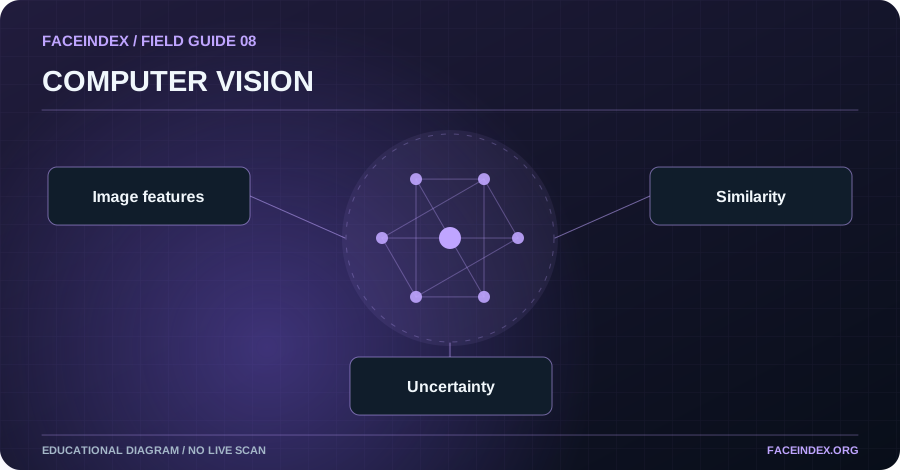
Face-matching systems compare numerical representations of facial features; reverse image retrieval can compare broader visual content. Both can make errors and results depend on the task and data. Facial similarity cannot establish a person's identity, consent or intimate activity.
Different kinds of visual intelligence
Computer vision systems can produce numerical representations of an image for tasks such as retrieving visually related material. Face-matching models instead focus on patterns associated with facial appearance. The two approaches are not interchangeable, and neither produces a verified biography of a person.
Why models return candidates instead of facts
A similarity function is a way to rank or compare representations. What appears in the returned collection depends on the system's accessible data and evaluation design. Results may include unrelated images, altered pictures or missing relevant content. A ranked result is not evidence of the real-world identity of a person.
Why intimate settings need additional care
An intimate image can be real, edited, synthetic or published without permission. Using a facial resemblance to make a claim about a person's private life can expose them to harassment, reputational harm or extortion. It is inappropriate to use matching systems to identify nonconsenting people in this context.
A responsible technical demonstration
Educational models can illustrate similarity using fictional shapes, sample patterns and anonymous visual features. A researcher can discuss error rates or test a system on consented non-intimate material without attaching identities to sensitive content. The FaceIndex Research Lab uses conceptual explanations rather than performing intimate-image identification.
Step-by-step action checklist
- Identify whether the tool compares whole images or facial features.
- Ask how the system defines similarity and errors.
- Treat candidates as uncertain rather than confirmed facts.
- Limit any hands-on testing to consented non-intimate references.
What responsible action looks like
Two abstract feature diagrams return a high similarity value because their overall patterns are alike. The example shows why proximity in a representation is different from asserting a verified real-world identity.
Does a face match prove that someone appears in porn?
No. It does not establish identity, authenticity, consent or conduct. Do not use such matches to make intimate-activity claims.