
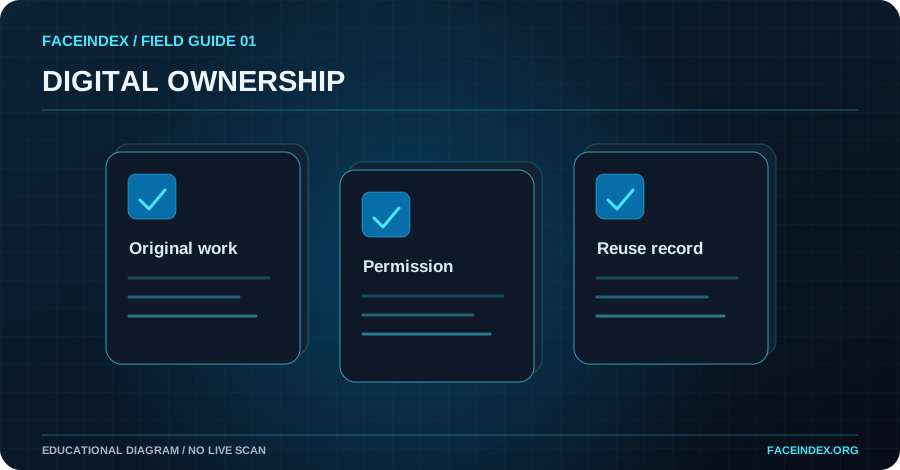
A reverse image check can help you evaluate possible copies of a photo you own, but cannot establish consent or identify an uploader. Start with a non-intimate reference you are authorized to use and retain original publication records. Verify any potential copy independently before reporting it.
Build a reference library you control
The most useful protection asset is often a reliable record of your original work. Store the original file, publication date, the account where you released it and any licensing agreements together. If you publish a series of images, assign each work a simple reference number that you can use when documenting a suspected copy. Keep these records private rather than putting sensitive photos into a publicly shared spreadsheet.
Separate image reuse from identity claims
An image that looks similar may be a crop, a re-edit, a stock photograph or an unrelated picture. In intimate contexts, drawing conclusions about a person's identity from facial resemblance can create serious harm. For an ownership review, the relevant question is whether your own creative work was reused and whether that use was authorized. A non-intimate reference image may help you review public matches without sharing sensitive content.
Turn a possible match into an incident record
Record the page address, date and what you observed without circulating the material. Compare the publisher with your own list of authorized distributors. If the use is permitted, mark the incident as licensed; if you cannot establish permission, keep it open for further review. Do not contact or accuse an individual based on appearance alone.
From evidence to action
For a work you own, review the platform's copyright reporting procedure. If your private image was posted without consent, look for its dedicated privacy or intimate-image abuse channel instead. These are separate grounds for reporting. You can use the Creator Defense Center to prepare a private checklist before submitting a request.
Step-by-step action checklist
- Create a private work ID and record the original publication.
- Review only your own non-intimate or authorized reference images.
- Document known suspected copies and verify permissions.
- Choose the applicable reporting channel and retain its reference.
What responsible action looks like
An independent creator discovers that a licensed promotional image appears in a third-party post. The creator checks the license first, records the URL and only opens a copyright incident if the use exceeds the permission granted.
Does a visual match prove unauthorized use?
No. Similarity is a starting point. Ownership, permissions and publication context determine whether a report is justified.