
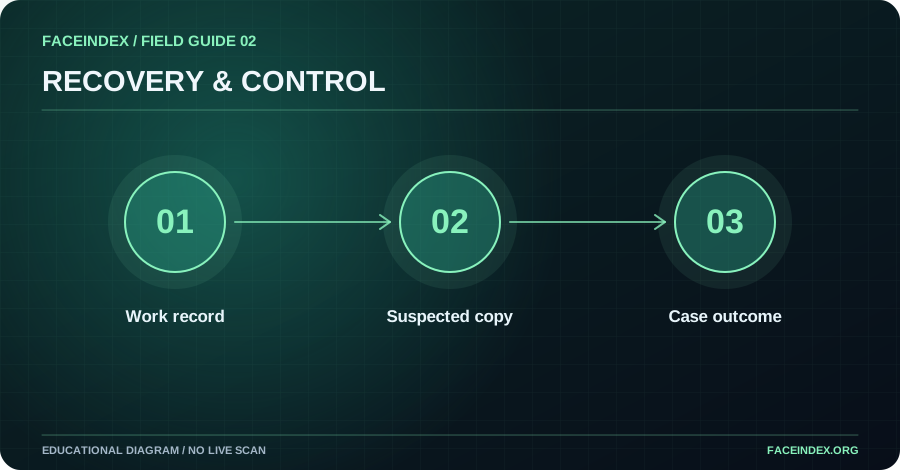
If a copy of content you own is reported to you, compare it against your original publication and permissions. Preserve the specific URL and a private record instead of redistributing intimate material. Use a copyright or privacy reporting process that fits the facts.
What counts as content theft?
A repost can be unauthorized even when the underlying image was originally available to paying subscribers. But a repost can also be an authorized promotional release, a licensee's publication or a use that requires legal analysis. Establish what rights you hold and what permissions were given before sending a claim. The presence of a matching face does not resolve ownership.
Identify the work, not the person
A reference library organized around your own original works helps connect a suspected copy to a known creation. Exact-file comparison and visual review are different from identifying the identity of a person depicted in content. Focus on correspondence between the works, not names, social accounts or identities of people in intimate material.
Document the actual infringement
A vague statement that your material is online is hard for a reviewer to act on. Keep the known URL, date, work identifier and relevant ownership record. If several different addresses contain the same work, assign each address its own incident entry; a single report outcome may not cover every location. Keep screenshots limited to what an official reporting process actually requires.
Measure recovery rather than match counts
Track submitted, acknowledged, resolved and disputed cases separately. A result disappearing from search is different from the hosting page removing the material. Review the specific address associated with a report to confirm its outcome when safe to do so. If ownership is disputed, obtain qualified advice rather than escalating automatically.
Step-by-step action checklist
- Locate the original work in your own archive.
- Record the specific reported copy and compare permissions.
- Prepare an accurate report using the platform's official process.
- Track the response and confirm the reported outcome.
What responsible action looks like
Two URLs are reported for the same creator-owned image. One is an approved affiliate post; the other is not. The creator closes the first record as licensed and prepares a specific report about the second.
Can a takedown remove every copy automatically?
No. Different hosts and services may handle separate URLs differently. Record each known incident and avoid promises about complete removal.