
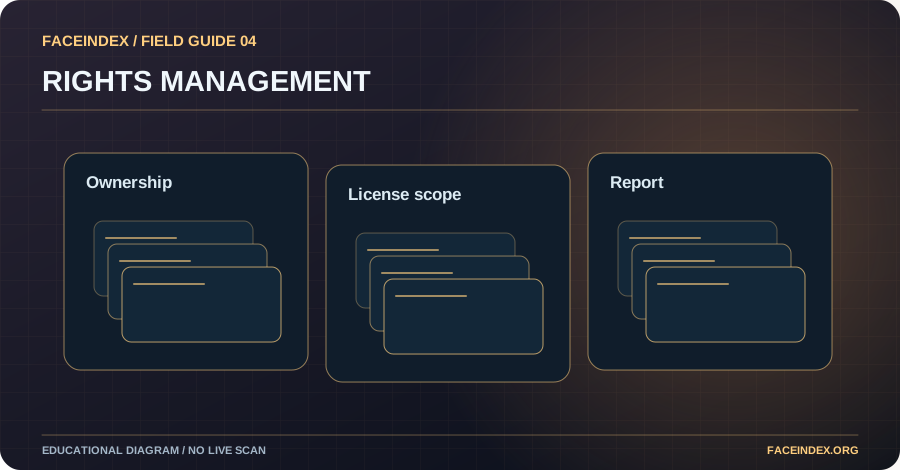
Image correspondence is only one part of a copyright assessment. Verify your ownership or authority, check license terms and document the specific suspected infringement. Use the correct copyright reporting process rather than assuming every appearance of an image is unauthorized.
Ownership and consent are different
Copyright concerns rights in a creative work; consent concerns permission to participate in or distribute intimate imagery. The person appearing in an image may not own its copyright, while a copyright owner may not have permission to publish sensitive material. Treat the two issues independently when deciding which reporting channel to use.
Keep a license register
A creator working with photographers, editors, agencies or collaborative accounts can face complicated permissions. Write down each agreement's permitted use, territory, duration and any restrictions on reposting. Retain the actual agreement, not merely a summary. When an image appears outside its usual context, compare the known use with these terms.
What an image match can and cannot establish
An exact copy can help connect a reported work to an original. It does not determine whether copying is unlawful, whether an exception applies or who controls a hosting account. Similarity should not be treated as a legal conclusion. For intimate imagery, avoid efforts to identify depicted individuals; focus on your own work.
Prepare an accurate copyright request
Use the reporting channel appropriate to the service and jurisdiction. In the US, a section 512 notice is ordinarily made by a rights holder or authorized representative. Review the official requirements and make truthful statements. If there are unresolved ownership questions, consult a qualified professional before submitting a notice.
Step-by-step action checklist
- Record ownership and any joint-creator arrangements.
- Check the rights granted to the suspected publisher.
- Document the specific work and alleged infringing URL.
- Review official notice requirements or seek advice.
What responsible action looks like
A promotional image was licensed for a single campaign. Months later it appears in another campaign. The creator checks the agreement's duration and scope instead of assuming the new appearance is permitted or prohibited.
Can I send a DMCA notice just because I appear in a photo?
Not necessarily. Copyright claims require the applicable rights or authority. A privacy or nonconsensual-image process may be more appropriate.