
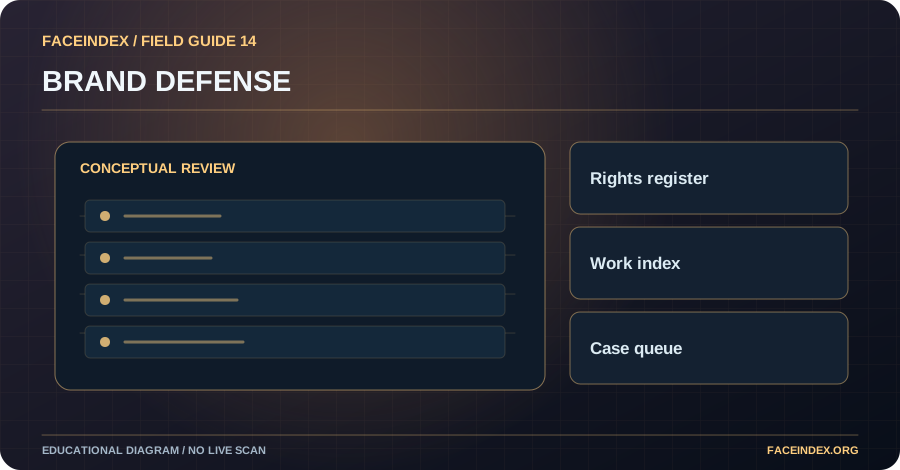
Professional copyright protection starts with a reliable inventory of rights and distribution permissions. Visual matches may help review a creator-owned work but cannot establish infringement by themselves. A consistent evidence and reporting workflow is more useful than an unverified match total.
Build a rights register before a crisis
For each work, record the creator, ownership arrangement, release date and any relevant contracts. Where collaborators appear, record authorized uses and relevant restrictions with appropriate privacy safeguards. Do not assume that having access to a file establishes copyright ownership or publication consent.
Make reports easy to review
Use consistent work IDs and separate them from incident IDs. Each incident should have a specific URL, discovery date, known rights and report status. This creates a clear trail from the original work to your reporting decision. It also makes it easier to identify duplicates without resending the same report.
Define your team's boundaries
Anyone helping with creator protection should receive only the minimum information needed and be authorized to act. Do not delegate identification of people in intimate imagery or circulate sensitive originals through shared group chats. Set rules for retention and removal of access when a contractor leaves.
Measure meaningful outcomes
Useful metrics include the number of resolved verified incidents, time to acknowledge a report and unresolved ownership questions. Avoid treating every search candidate as piracy. When considering a paid service, compare what it actually monitors, how it protects data and which outcomes it reports rather than assuming a guarantee.
Step-by-step action checklist
- Maintain a private work and rights register.
- Assign a unique identifier to each reported incident.
- Limit team access to authorized records.
- Review verified outcomes and unresolved cases.
What responsible action looks like
A small agency uses work IDs and case IDs to track reports for three creators. When a new URL is received, it can link to a verified rights record without exchanging intimate media with every team member.
Should a creator team maintain a library of suspected intimate copies?
Avoid collecting unnecessary sensitive material. Prefer the relevant URL, ownership record and official report reference; follow applicable evidence and retention requirements.