
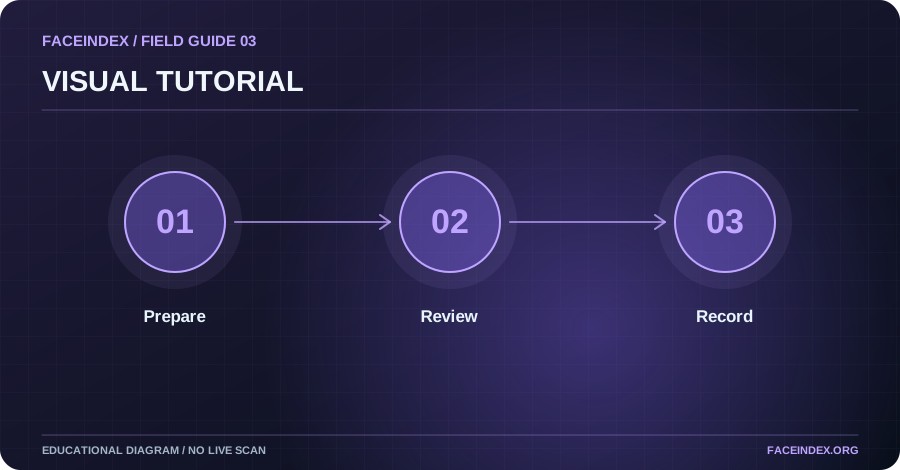
Begin by confirming that you own or are authorized to review the work. Use your own non-intimate reference images where image search is appropriate and record any known suspected copying separately. Never treat a result as proof of infringement without checking the rights and context.
Step one: define the scope
Before choosing a tool, decide which work you are dealing with and what you need to establish. Is the concern about a specific image, a misleading profile or a published copy of an entire set? A precisely framed question prevents you from collecting unnecessary material and avoids using an image search for unrelated identification.
Step two: prepare safely
Keep originals in a private folder, with a brief inventory of publication and licensing details. If you use an image-search service, review its data handling and use a non-intimate reference you have permission to submit. Do not submit a third party's intimate image, and avoid using services that cannot explain their privacy practices.
Step three: interpret results conservatively
A tool might show a visually similar image, a modified version or nothing at all. Its collection will not necessarily include protected, private or inaccessible pages. Mark a result as a possible copy until you establish that it corresponds to your work; do not infer identity, consent or private conduct from similarity.
Step four: decide on a next action
Check whether the known use is licensed. For a genuine concern, document the location and applicable rights, then choose the official reporting route. Keep a record of the decision and review date. This turns an uncertain visual observation into a manageable process without promising universal coverage.
Step-by-step action checklist
- Define the work and your authorization.
- Prepare a non-intimate reference and private ownership records.
- Review possible copies without inferring someone's identity.
- Document the outcome and choose a response only if warranted.
What responsible action looks like
A creator wants to review reuse of a publicly posted, non-intimate promotional portrait. They retain the original and note the permitted publisher before any search. A similar photo alone remains an unresolved lead until the creative work is verified.
Should I upload an intimate original to a search engine?
Avoid unnecessary exposure of sensitive images. Use safer non-intimate references when possible, and choose privacy or reporting services appropriate to the incident.