
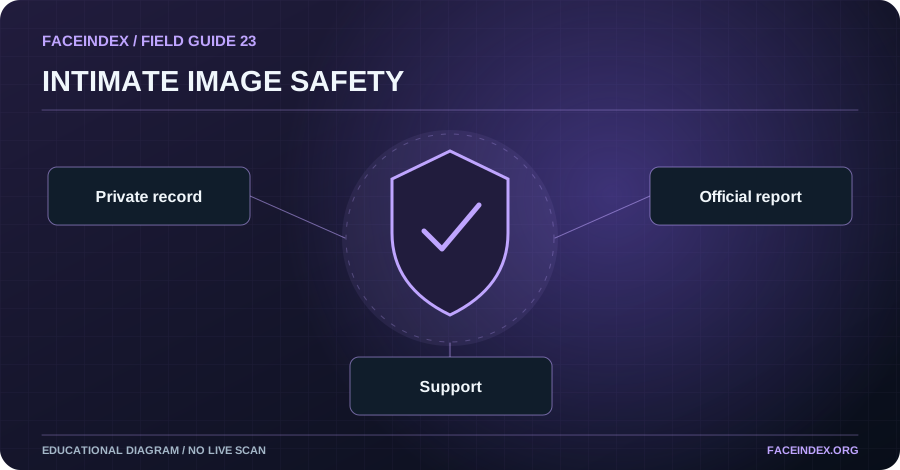
For nonconsensual intimate-image misuse, you can seek help without identifying the uploader or proving a facial match. Preserve relevant URLs and dates safely, then use the appropriate official reporting process. Consider eligible privacy-preserving support services and search removal as separate steps.
Prioritize your safety and support
Nonconsensual intimate-image distribution and threats can cause real harm. You do not need to confront the suspected distributor or engage with anyone demanding payment. Seek trusted assistance and, if there is immediate danger, contact local emergency services. Preserve threatening communications when safe.
Choose privacy-preserving evidence
A known URL and date may be more useful than collecting a large collection of intimate images. Do not redistribute the material. If a minor is depicted in sexual material, do not download or share it; use a child-safety reporting route. Adults may consider specialist services such as StopNCII.org if eligible; consult its official explanation of participating-platform coverage and its hash-based process.
Decide which removal channels apply
Use the platform's nonconsensual intimate-image policy or abuse-reporting route. If you also hold copyright, a separate copyright process may apply. Google offers personal sexual-image removal options for eligible results. These processes do not require identifying a person from intimate content; describe the known harm and location.
Plan for follow-up and unresolved cases
Retain report receipt information privately. Track source and search outcomes separately. There may be disputes, additional requests or new known incidents. A qualified support organization or legal professional may help with complicated situations, particularly those involving threats, safety or jurisdictional questions.
Step-by-step action checklist
- Seek trusted support and prioritize immediate safety.
- Record the known URL and incident date privately.
- Submit the applicable privacy or intimate-image report.
- Track decisions and consider eligible specialist support.
What responsible action looks like
A victim of unauthorized sharing already has a specific link. They choose the host's abuse form and evaluate whether a privacy-preserving specialist service is appropriate, rather than uploading intimate content to unrelated search websites.
Do I need a facial recognition search before asking for removal?
No. A known incident can be reported directly. Do not use facial matching to identify people in intimate imagery.